
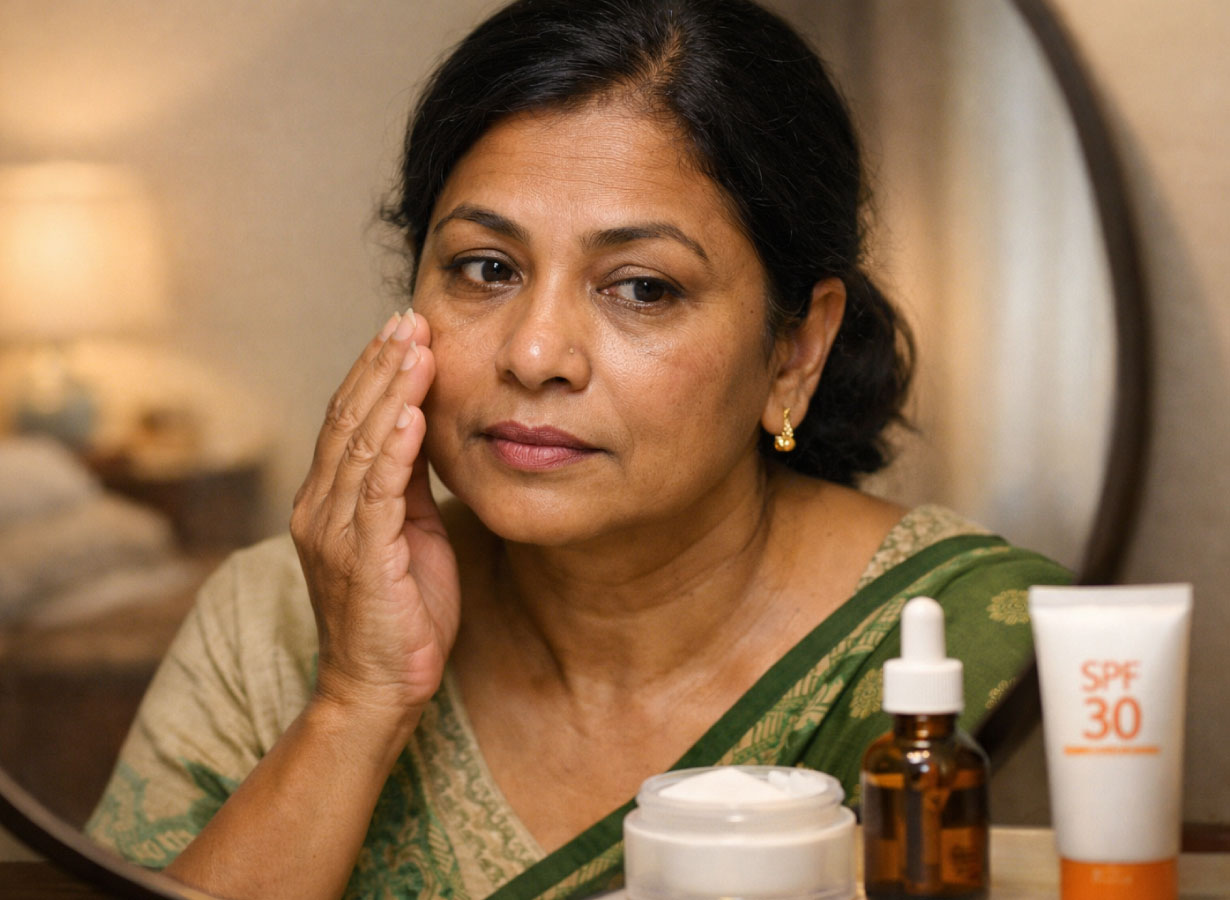
From ancient fairy tales to modern science, humans have always dreamed of staying young forever. While eternal youth remains impossible, healthy and youthful-looking skin is achievable with the right care. Aging is a natural part of life, but many people experience visible skin problems earlier than expected.
As age increases, the skin slowly loses its softness, glow, and firmness. Smooth, tight skin gradually becomes dull, dry, wrinkled, and sagging. But why does this happen? What exactly changes inside the skin as we grow older?
Let’s explore the science of aging skin, common problems that appear with age, and how smart skincare choices can help slow down the process.
How Skin Changes Over Time
Our skin is constantly renewing itself. New skin cells are formed in deeper layers and move upward, while dead cells accumulate on the surface and eventually shed. This natural renewal process keeps skin healthy and glowing.
However, as we age, this process slows down. One of the major skin aging causes is reduced cell turnover. At the same time, collagen—an essential protein responsible for firmness and elasticity—starts decreasing. As a result, skin repair becomes slower, and damage accumulates more easily.
This is why aging skin often looks tired, rough, and less radiant.
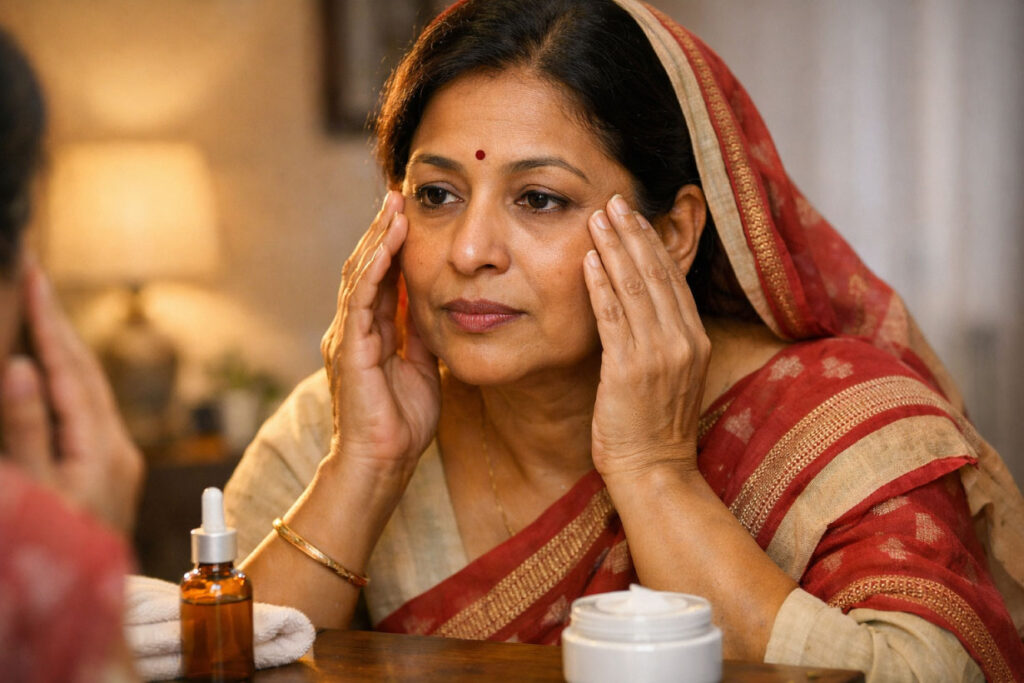
Common Skin Problems That Appear With Age
Understanding the signs of skin aging helps you take timely action before damage becomes severe.
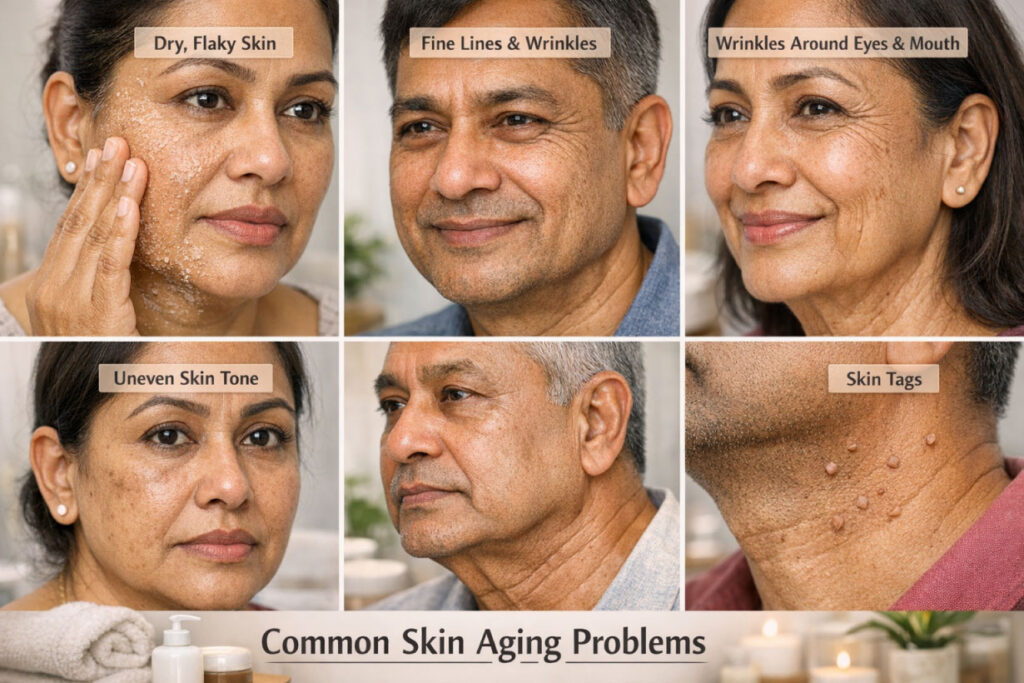
1. Dry and Dehydrated Skin
With age, the skin’s ability to retain moisture weakens. Natural oil production decreases, leading to dryness and rough texture. Dry skin isn’t just uncomfortable—it can make your skin look dull, rough, and aged faster. also trigger itching, irritation, inflammation, and sensitivity.
Regular hydration and moisturization are essential for restoring softness and comfort.
2. Slow Healing, Marks, and Sensitivity
Aging skin takes longer to heal from cuts, acne, or irritation. It also becomes more sensitive, reacting easily to unsuitable products. Without proper guidance, poor skincare choices can lead to redness, rashes, or long-lasting marks.
This is why professional advice becomes increasingly important with age.
3. Wrinkles and Fine Lines
Dry skin isn’t just uncomfortable—it can make your skin look dull, rough, and aged faster. Wrinkles are one of the first signs that your skin is aging. They form due to collagen loss, sun exposure, pollution, and repeated facial movements. Over time, fine lines deepen, making the skin look loose and tired.
Targeted skincare and treatments can significantly reduce their appearance.
4. Loss of Glow and Uneven Texture
Aging skin often appears dull due to the buildup of dead skin cells. Reduced blood circulation and slower renewal contribute to uneven texture and tone.
Gentle exfoliation and brightening ingredients help restore clarity.
5. Sagging Skin and Skin Tags
As elasticity decreases, skin begins to sag, especially around the jawline, eyes, and neck. Skin tags may also appear due to changes in skin structure. Most of the time, they’re harmless, but they can occasionally be uncomfortable or inflamed.
Preventive care is always better than correction.
Can Aging Skin Be Managed? Absolutely.
Although aging cannot be stopped, it can be managed effectively. A disciplined lifestyle, proper skincare habits, and modern dermatological solutions work together to maintain youthful skin.
A well-planned anti-aging skincare routine can help minimize signs of aging while improving the skin’s overall condition.
Key Ingredients That Truly Support Youthful Skin
Not all skincare products deliver results. Focus on clinically proven best anti-aging ingredients that work deep within the skin:
- Retinol – boosts collagen and smooths wrinkles.
- Vitamin C – improves brightness and protects from damage.
- Peptides – strengthen skin structure
- Hyaluronic Acid – provides deep hydration.
- Ceramides – repair and protect the skin barrier
Avoid harsh chemicals and unguided product use.
Why Professional Guidance Matters
As skin ages, its needs become more specific. Self-treatment or over-the-counter experimentation may worsen the condition. That’s why dermatologist-approved anti-aging treatments play a crucial role in long-term skin health.
Advanced treatments, when combined with proper home care, offer safer and more effective results—especially for aging concerns.
Many people today choose anti-aging skin care in Bangladesh under professional supervision to ensure visible improvement without damaging the skin.

Final Thoughts
Aging is inevitable, but premature skin damage is not. Skin problems increase with age mainly due to slower renewal, collagen loss, and environmental exposure. The good news is that timely care, smart ingredient choices, and expert guidance can dramatically slow this process.
With the right approach, anti-aging skin care in Bangladesh can help you maintain healthy, glowing, and confident skin at every stage of life.