
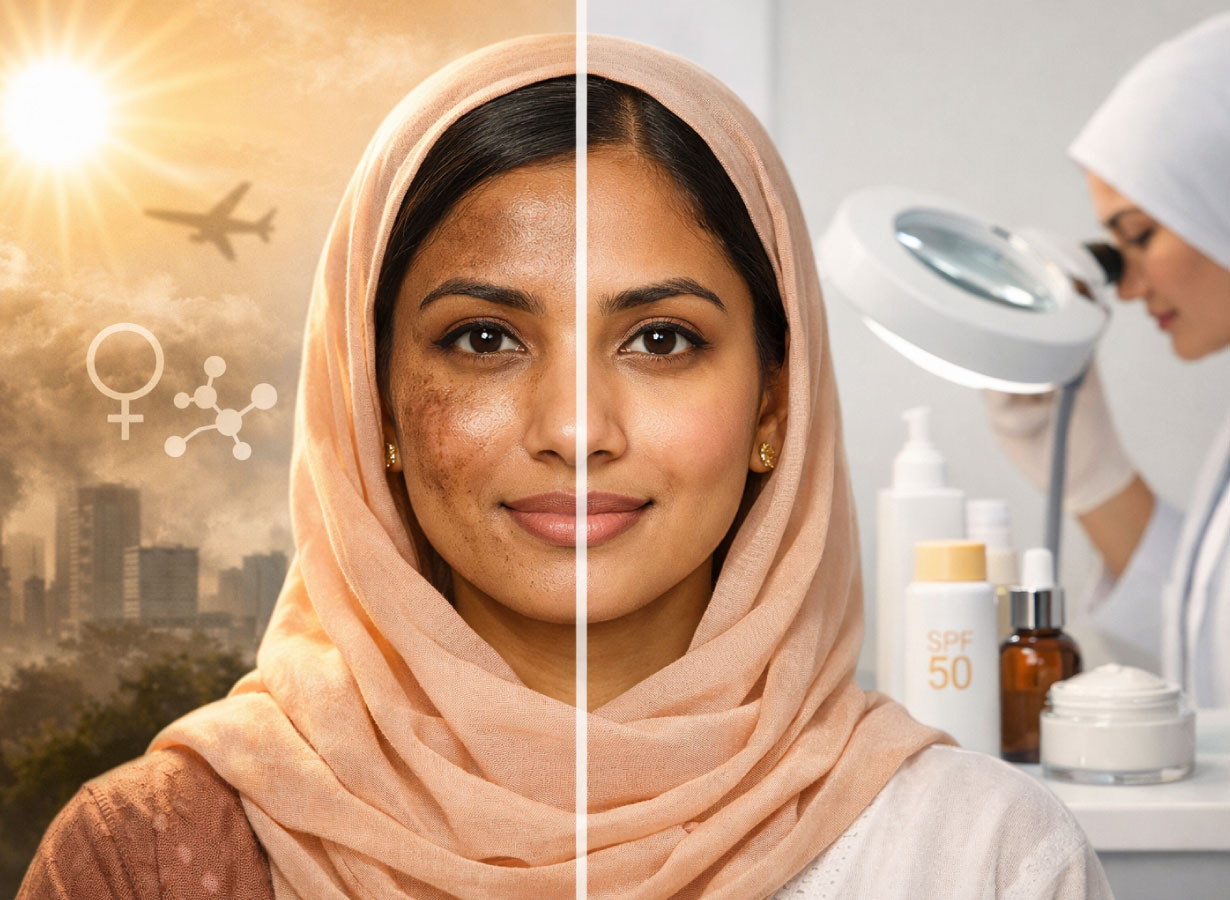
Our skin is not just about appearance; it reflects our overall health, habits, and lifestyle. Yet many people suddenly notice dark spots on face, uneven skin tone, or patchy discoloration on different parts of the body. This common concern is known as pigmentation.
Pigmentation may look simple, but it is often a complex skin issue. Without proper care and awareness, it can become long-lasting. With the right knowledge, consistent routine, and expert guidance, skin pigmentation treatment can become much more effective.
In this blog, we will explore:
- What pigmentation is and why it happens
- The difference between melasma and pigmentation
- Which age group is most affected
- Habits that worsen pigmentation
- Prevention and care strategies
- Home care effectiveness
- When to consult a dermatologist
Let’s begin.
What Is Pigmentation?
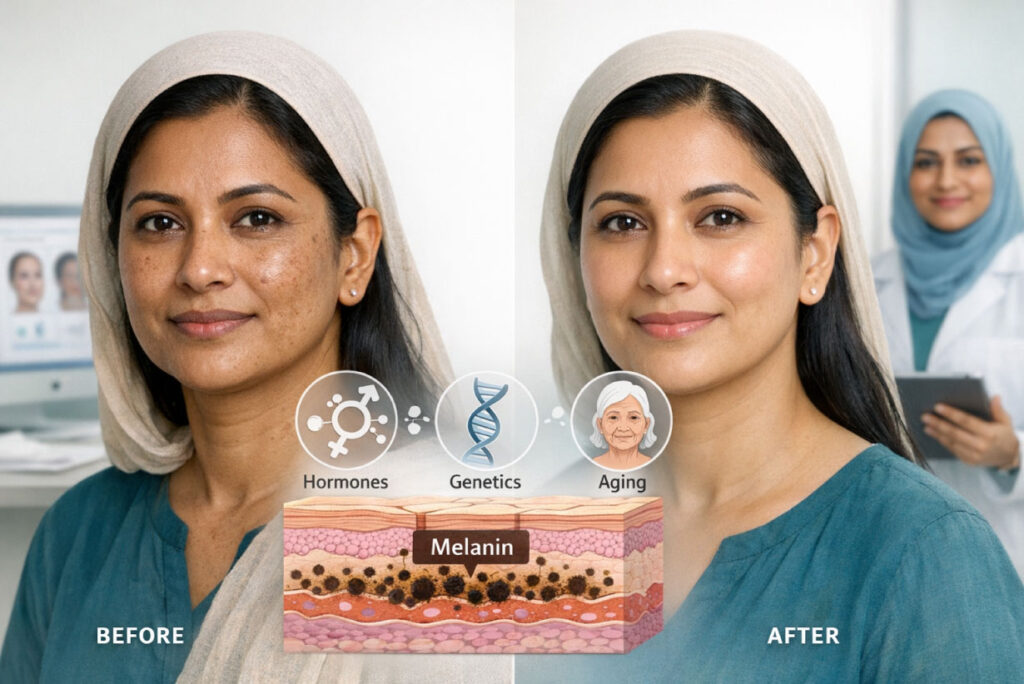
Pigmentation happens when skin color changes unevenly. Your natural skin tone is determined by melanin, the pigment in your skin. Irregular melanin production results in pigmentation, including dark patches and spots.
These patches may appear gradually and often worsen with sun exposure, hormonal changes, or inflammation.
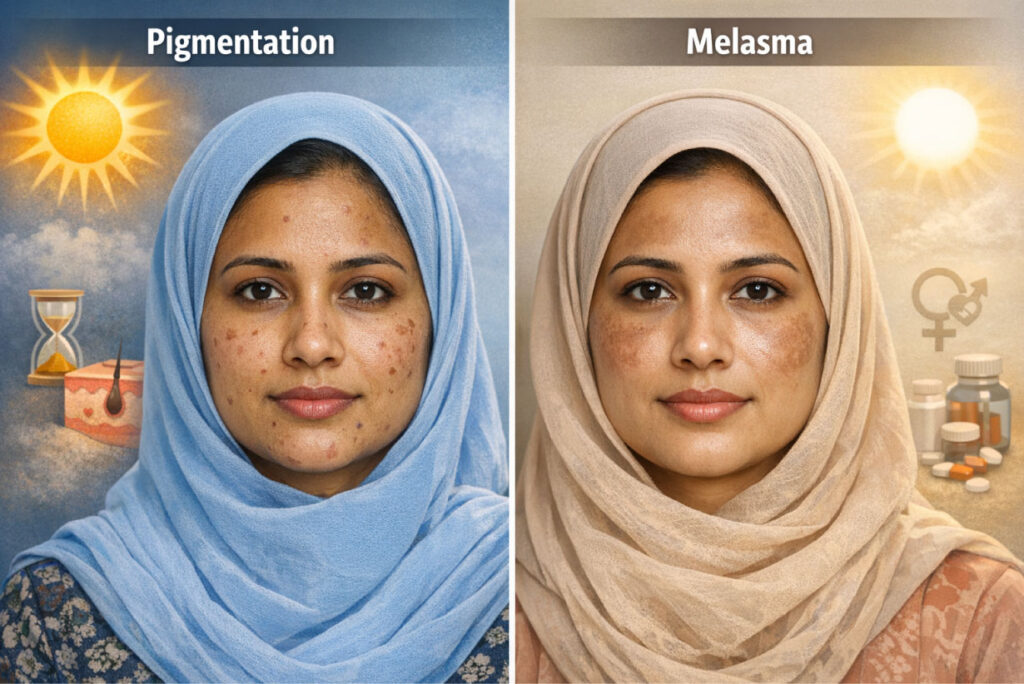
Pigmentation vs Melasma: What’s the Difference?
Many people confuse pigmentation with melasma, but they are not the same.
Pigmentation
Pigmentation includes any form of skin discoloration. Pigmentation causes include sun damage, acne marks, inflammation, aging, medications, and hormonal changes.
Melasma
Melasma is a specific type of pigmentation. It usually appears symmetrically on the cheeks, forehead, nose, or upper lip. Hormonal imbalance, pregnancy, and UV exposure trigger it.
👉 In simple terms: Melasma vs pigmentation means all melasma is pigmentation, but not all pigmentation is melasma.
Which Age Group Is Most Affected?
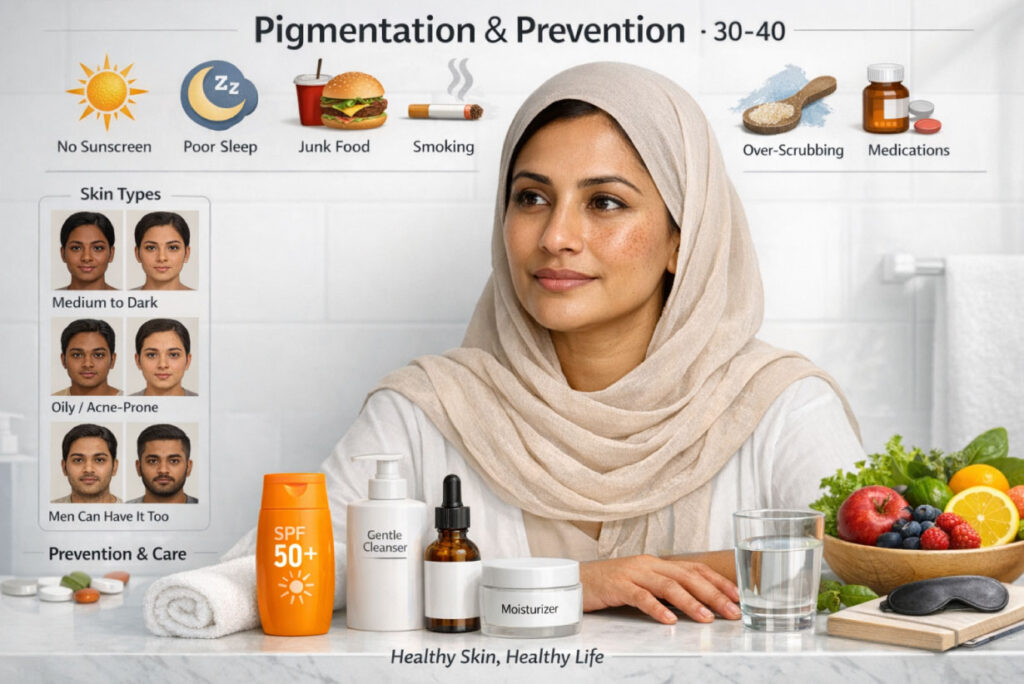
Pigmentation can occur at any age, but it is most common between 30 and 40 years. During this phase:
- Skin regeneration slows down.
- Sun damage becomes more visible.
- Hormonal fluctuations increase
However, younger people can also develop pigmentation due to excessive sun exposure, genetics, acne, pregnancy, or birth control pills.
Habits That Make Pigmentation Worse
Certain daily habits silently worsen pigmentation:
- Skipping sunscreen regularly
- Prolonged sun exposure
- Poor sleep and high stress
- Unhealthy diet (junk, oily, spicy foods)
- Smoking and alcohol consumption
- Ignoring skin inflammation or allergies
- Over-scrubbing the skin
- Side effects of certain medications
- Severe dryness and dehydration
Genetics can also make some people more prone to pigmentation.
Does Pigmentation Affect All Skin Types?
Yes, pigmentation can affect all skin types.
- If you have medium to dark skin, you may be more likely to experience pigmentation.
- Oily skin may develop post-acne dark spots.
- Dry skin holds pigmentation longer due to inflammation.
- Men experience pigmentation, too, though it is often ignored.
First Step to Prevention: Proper Skin Care
Simple daily habits play a powerful role in prevention:
- Use broad-spectrum SPF 50+ sunscreen daily.
- Cleanse your skin gently but consistently.
- Keep your skin well hydrated.
These habits not only prevent new pigmentation but also support skin pigmentation treatment over time.
How Effective Is Home Care?
Home care works well when done consistently.
- Cleanser: Removes dirt, oil, and impurities
- Serums (Vitamin C, Niacinamide, Alpha Arbutin): Brighten and reduce dark spots
- Moisturizer: Strengthens the skin barrier
Deep pigmentation requires patience. Visible improvement often takes weeks or months. Always consult a professional before using active ingredients.
Sun Protection: A Non-Negotiable Step
UV rays stimulate melanin production and worsen pigmentation faster than any other factor.
To protect your skin:
- Use SPF 50+ sunscreen daily.
- Reapply every 2–3 hours outdoors.
- Wear hats, sunglasses, or use umbrellas.
Sun protection is essential for successful skin pigmentation treatment.
Why Cleansing Matters More Than You Think
Cleansing is the foundation of skincare. Throughout the day, dirt, oil, makeup, and dead skin cells accumulate on the skin.
Clean skin helps:
- Reduce acne and inflammation.
- Prevent worsening of pigmentation.
- Improve absorption of skincare products.
Best Cleansing Practice:
- Cleanse twice daily (morning & night)
- Pick a gentle cleanser that works for your skin.
- Follow with moisturizer immediately.
Inner Care Matters Too
Healthy skin starts from within. External products alone cannot fix pigmentation.
Include in your lifestyle:
- Antioxidant-rich foods (fruits, vegetables, nuts, green tea)
- Plenty of water
- Quality sleep and stress management
- Zinc, Vitamin C, E, Omega-3-rich diet
Can Pigmentation Be Completely Removed?
The result depends on skin type, cause, and consistency.
Mild Pigmentation
Sun spots or acne marks often fade significantly with proper routine.
Deep or Hormonal Pigmentation
Melasma or long-term pigmentation may not fully disappear, but it can lighten with care.
Why Complete Removal Is Difficult:
- Melanin sits deep in the skin.
- Hormonal or genetic triggers may persist.
- Skin regeneration slows with age.
Choosing the Right Solution
Every skin is unique. To choose the right approach:
- Understand your skin type.
- Identify the depth of pigmentation.
- Avoid skincare mistakes
- Seek professional advice if needed.
Advanced dermatologist treatment for pigmentation can safely deliver long-term improvement when home care isn’t enough.
When Should You See a Dermatologist?
Consult a dermatologist if:
- Dark spots persist for months.
- Home care shows no improvement.
- Skin becomes overly sensitive.
- You need safe, targeted treatment.
Professional guidance reduces risk and improves outcomes.
Final Thoughts
Pigmentation is common but manageable. While it may not completely disappear, consistent care, healthy habits, and sun protection can significantly improve your skin’s appearance.
Remember, patience, awareness, and the right routine are your strongest tools. If pigmentation concerns you, consult a specialist and stay committed to your skincare journey.