
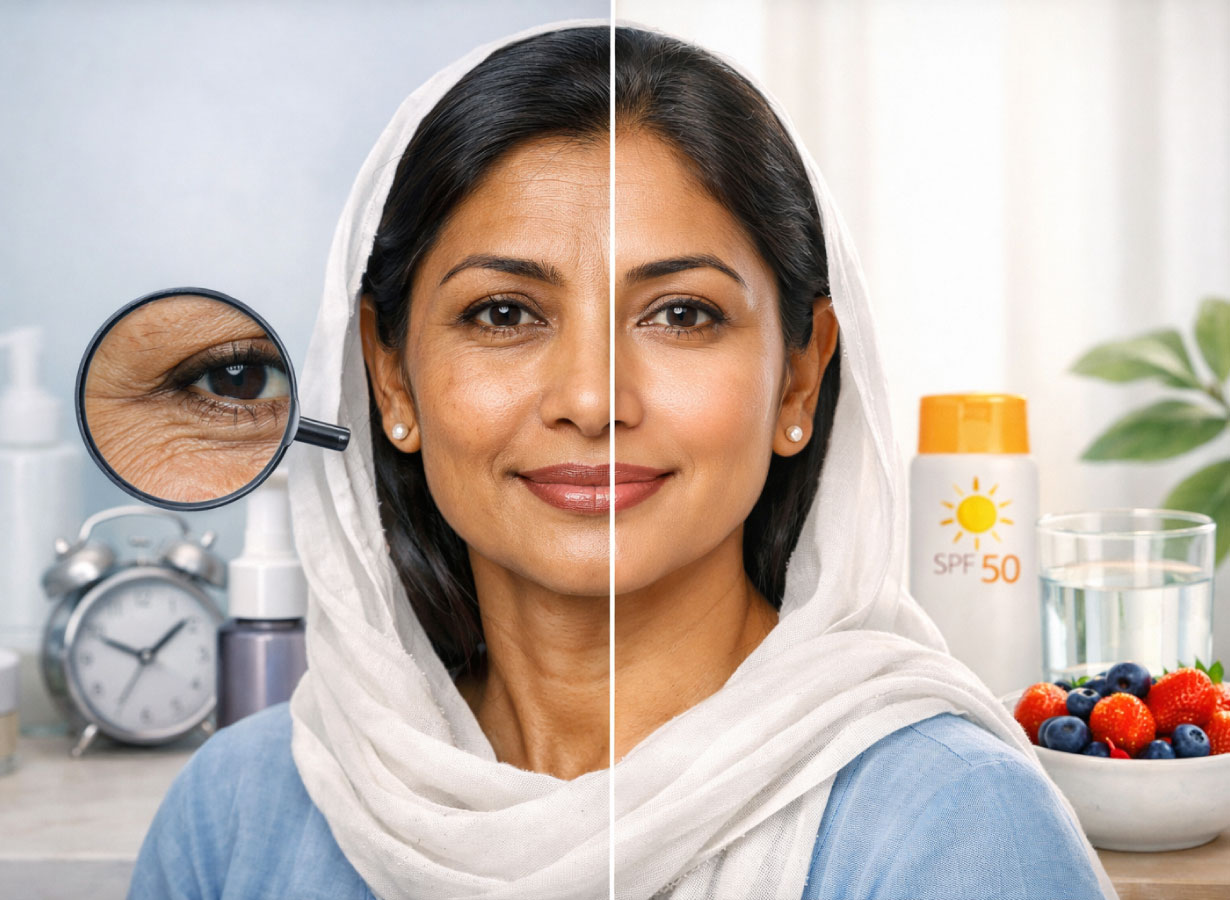
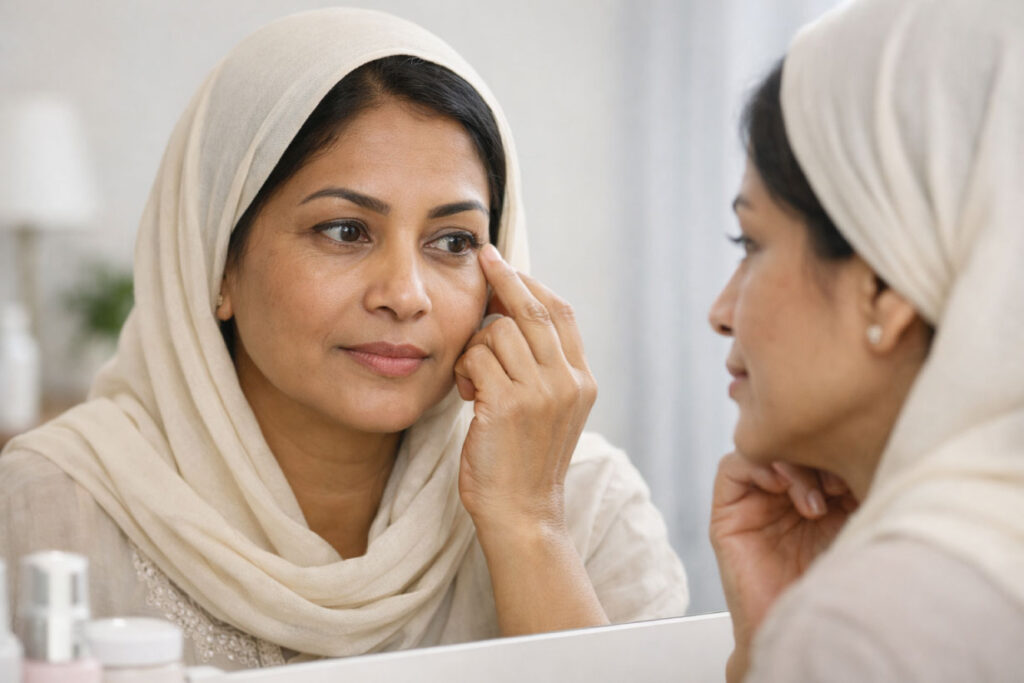
Have you ever looked in the mirror and suddenly noticed fine lines on your forehead or around your eyes? Maybe your skin feels less firm, less bright, or more tired than before. These moments often trigger worry—is my skin aging too fast?
Skin aging is a natural process, but many people misunderstand it. Aging does not mean losing beauty, and expensive products alone cannot stop it. In reality, aging depends on a combination of biology, lifestyle, sun exposure, and daily habits.
This blog explains the signs of skin aging, why they appear, and how you can slow them down with the right care and awareness.
What Does Skin Aging Really Mean?
Skin aging refers to visible and structural changes in the skin that develop over time. These changes affect not only appearance but also skin strength, elasticity, and repair ability.
When skin is not properly cared for, aging signs appear earlier and progress faster. Genetics, environment, skincare habits, and lifestyle all influence how fast your skin ages.
Common Signs of Skin Aging
Identifying early changes helps you respond before aging is more apparent.
Early Signs Are:
- Fine lines around the eyes and lips
- Dull and uneven skin tone
- Dryness and dehydration
- Increased sensitivity to sunlight
- Mild loss of firmness
Advanced Signs:
- Deep wrinkles and folds
- Sagging skin on cheeks, jawline, and neck
- Pigmentation and age spots
- Changes in facial structure
These signs of skin aging gradually become more visible if left unmanaged.
Why Does Skin Age? Main Causes Explained
Skin aging does not happen overnight. Several internal and external factors work together.
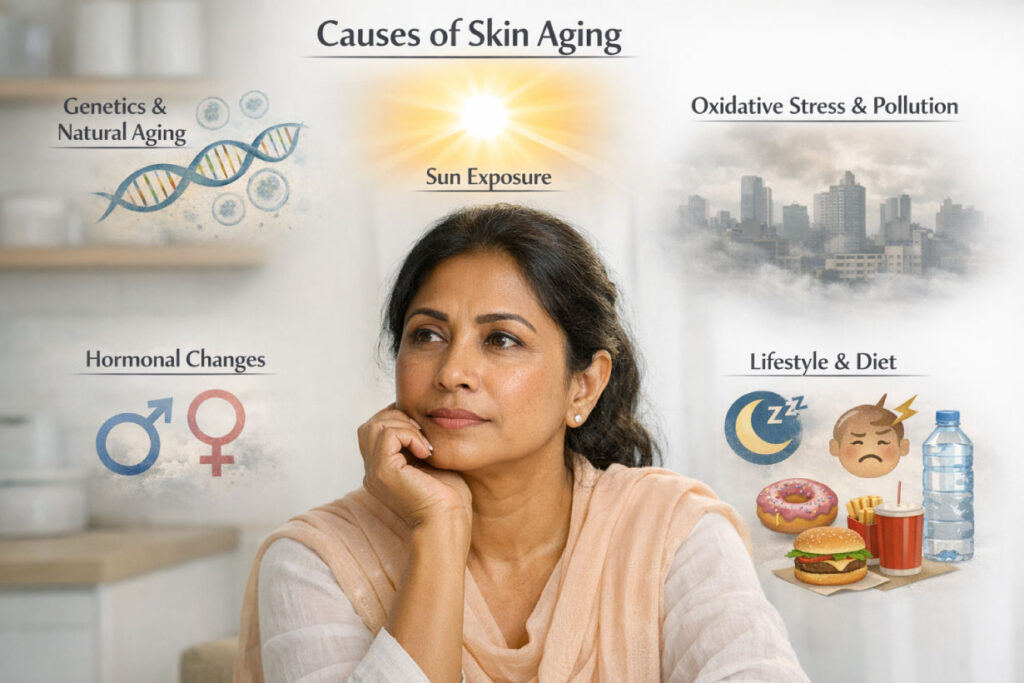
1. Natural Aging (Intrinsic Aging)
This is the biological aging process controlled by genetics. As we age, cell renewal slows down, and collagen production decreases.
- Reduced collagen and elastin cause wrinkles and sagging.
- Skin becomes thinner and less elastic.
- Repair and healing take longer.
You cannot stop intrinsic aging, but you can slow its visible effects.
2. Sun Exposure (Photoaging)
Sun damage is the biggest external aging factor, especially in tropical countries like Bangladesh.
- UV rays break down collagen fibers.
- Free radicals damage skin cells.
- Wrinkles, pigmentation, and rough texture appear faster.
Daily sun protection is a must, even on cloudy days or in winter.
3. Oxidative Stress and Pollution
Pollution, smoking, and toxins increase the production of free radicals in the skin.
- Free radicals damage skin cells.
- Inflammation accelerates aging.
- Skin loses brightness and strength.
A lack of antioxidants worsens this damage and speeds up aging.
4. Hormonal Changes
Hormones play a major role in the matter of skin health, especially for women.
- Estrogen decline reduces skin hydration and elasticity.
- Menopause often increases dryness and sagging.
- Hormonal imbalance can accelerate visible aging.
5. Lifestyle and Diet Habits
Daily habits strongly affect how your skin ages.
- Poor sleep slows skin repair.
- Chronic stress increases inflammation.
- Dehydration makes fine lines more visible.
- Excess sugar damages collagen (glycation process)
These are common causes of premature aging that many people overlook.
How to Slow Down Skin Aging Effectively
While aging cannot be stopped, it can be delayed with consistent and smart care.
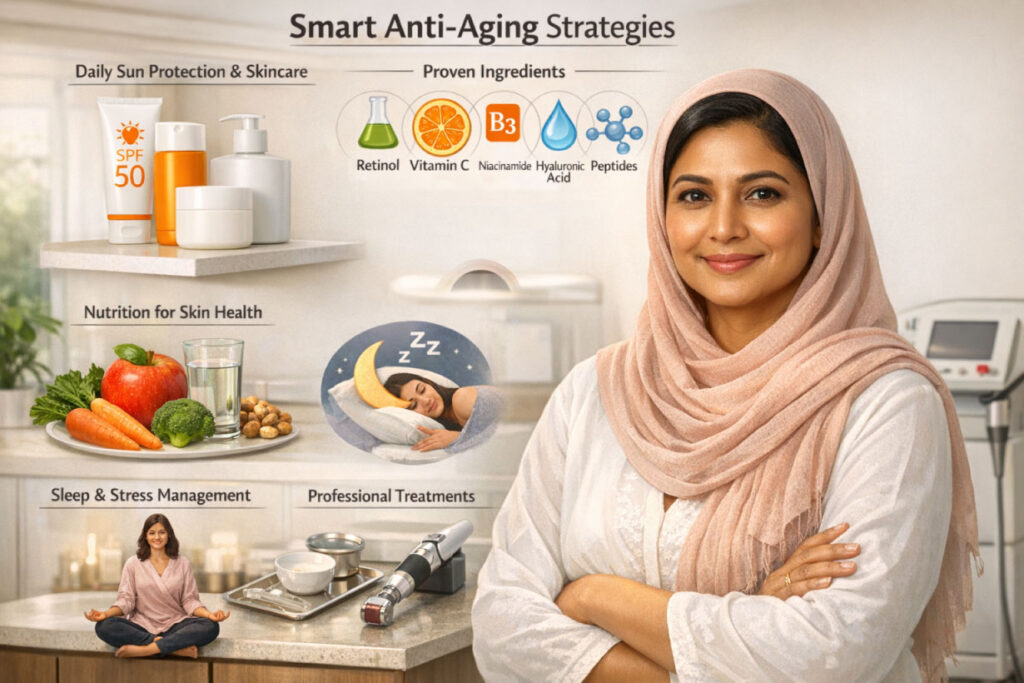
1. Daily Sun Protection and Skincare
It says that, Sunprotection is the foundation of any anti-aging skincare routine.
- Use broad-spectrum SPF 50+ sunscreen daily.
- Cleanse gently to avoid barrier damage.
- Moisturize to maintain hydration.
- Exfoliate mildly to support cell renewal.
Consistency matters more than expensive products.
2. Use Scientifically Proven Ingredients
Not all skincare ingredients fight aging. Focus on the best anti-aging ingredients:
- Retinoids – boost collagen and reduce wrinkles.
- Vitamin C – brightens skin and protects from free radicals.
- Niacinamide – improves elasticity and strengthens the barrier.
- Hyaluronic acid – deeply hydrates and plumps skin.
- Peptides – support skin repair
Use active ingredients slowly and always use sunscreen with them.
3. Eat for Healthy, Youthful Skin
Nutrition supports skin aging from within.
- Antioxidants (fruits, vegetables) fight free radicals.
- Omega-3 fatty acids improve elasticity.
- Adequate protein supports collagen formation.
- Drink enough water to prevent dehydration.
Healthy skin reflects a healthy lifestyle.
4. Sleep Well and Manage Stress
Skin repairs itself while you sleep.
- Aim for 7–8 hours of quality sleep.
- Reduce stress through meditation or light exercise.
- Lower cortisol levels help protect collagen.
Good sleep and a calm mind naturally slow visible aging.
5. Consider Professional Skin Treatments
When home care is not enough, medical treatments help.
Common professional anti-aging treatments include:
- Chemical peels for texture and tone improvement
- Microneedling to boost collagen
- Laser therapy for wrinkles and pigmentation
- Advanced facials for hydration and glow
People increasingly choose anti-aging treatment in Bangladesh through dermatologist-guided plans for safe and long-lasting results.
When Should You See a Skin Specialist?
Consult a dermatologist if:
- Aging signs appear suddenly or worsen rapidly.
- Deep wrinkles or pigmentation develop early.
- Home skincare shows no improvement.
- Skin becomes sensitive or irritated frequently.
Early medical guidance prevents long-term damage.
Final Thoughts
Aging is not a flaw—it is a natural part of life. However, premature aging is often preventable. With sun protection, balanced nutrition, stress control, and the right skincare, you can slow aging and maintain healthy skin for years.
Choosing the right anti-aging treatment in Bangladesh means combining medical expertise with daily care. Remember, real anti-aging is not about chasing youth—it is about caring for your skin with knowledge, patience, and consistency.
Your skin tells your story. Take care of it, and let it age gracefully.